

For small and medium-sized businesses (SMBs), human resources (HR) teams wear multiple hats while functioning within limited time and resources.
From hunting for talent through hiring channels to recruiting and onboarding to overseeing payroll, compliance, and employee engagement, modern HR teams are expected to support business growth.
This is where HR automation solutions come in—a space inaccessible for small businesses earlier and only seen as reserved for large enterprises—driving impact on SMBs like never before.
In this guide, we will discuss the various HR automation solutions and their practical applicability to modernize HR teams, along with how partnering with automation experts accelerates the adoption.
5 Functional Areas HR Automation Solutions Can Optimize
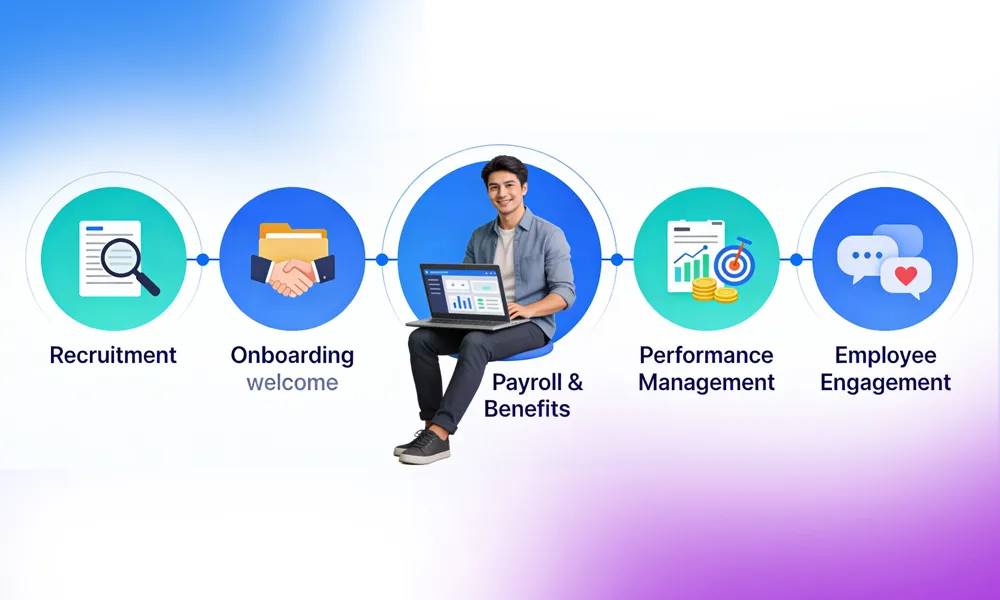
1. Recruitment and Hiring
HR automation experts enable SMBs to reduce the time and effort required to attract and select talent, shorten time-to-hire, improve hiring fit, and deliver a seamless candidate experience by:
-centralizing differentiated parts of the hiring process like manual job postings, resume tracking, and interview coordination,
-organizing candidate data in real time through applicant tracking systems and screening resumes based on predefined criteria to filter out unqualified candidates.
2. Onboarding and Offboarding
The employee lifecycle management component of human resource management includes taking care of both the onboarding and offboarding experiences.
Not only does this reduce compliance risks, protect company data, and ensure smooth transitions for both employees and HR teams, but it also adds to the overall employer branding effort of the company.
More than smooth onboarding, it is the exit strategy of a company that signals to the employees that they are valued, contributing to lower attrition and higher return rates.
HR automation solutions handle offer letters, e-signatures, document collection, verification, system access removal, final payroll processing, and exit documentation without manual follow-ups.
3. Payroll and Attendance
SMBs often lack the resources to hire specialists for specialized HR tasks like payroll, time, and attendance management—a core function of human resources.
For such teams, HR automation solutions minimize costly mistakes by eliminating manual data entry and saving significant administrative time.
This positively impacts employee trust and legal compliance, providing employees with timely and accurate information about their leaves, pay, etc. by:
-tracking work hours, overtime, leaves, attendance, pay and tax deduction records, and labor regulation compliance information,
-syncing manual spreadsheets to automated HR software, reducing error and making interactions instantaneous.
4. Performance and Feedback
A need for the day within the context of employee feedback is a move from the annual performance cycles to rhythms of continuous improvement.
As more and more Gen Zs join the workforce, and millennials take the place of decision-makers, they are replacing a wave of traditional stoicism in management, so employees stay on track without feeling micromanaged.
HR automation solutions allow SMBs to foster a culture of growth, transparency, and accountability that is prioritized by job seekers today by supporting frequent review cycles paced according to contextual discussion, like:
-weekly huddles for reports,
-monthly meetings for timelines,
quarterly trackers for staying on-brand.
5. Compliance and Policy
Three key elements in the current business landscape have transformed the way modern businesses operate.
First is a geographically distributed workforce, second is the increasing complexity of juridical regulations, and third is the need to retain employees by developing workforces.
HR automation solutions successfully tackle all three by:
-distributing company policies, tracking employee acknowledgements, and maintaining up-to-date records to keep distributed employees engaged,
-documenting workflows and storing them in an audit-ready environment, thereby making it faster and easier to report for compliance,
-depositing automatic reminders in place for certifications, licenses, mandatory training, and health and wellness check-ins.
5 Key Benefits of Partnering with HR Automation Experts
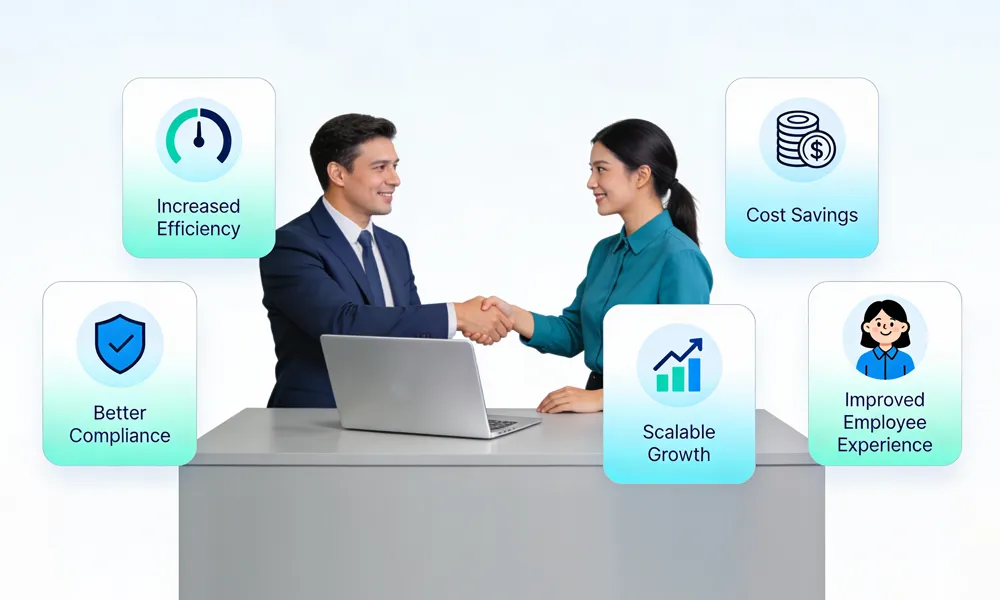
1. Time Savings
This is a dead giveaway—HR automation solutions save tremendous time for teams by automating repetitive and manual tasks such as data entry, approvals, and follow-ups.
This frees up hours in the calendars of HR teams for strategic planning and redirects their efforts towards revenue-focused initiatives like talent development, employee engagement, and workforce management.
2. Cost Efficiency
Following further from the previous benefit, cost savings is the next big consideration. Growing small and medium-sized businesses requires large HR teams to manage the variety of tasks we discussed in the last section.
HR automation solutions solve this problem not just by saving money but also by controlling incremental headcounts through managing tasks that would otherwise require manual intervention.
3. Improved Accuracy
HR automation solutions templatize and standardize workflows when automating manual tasks, saving teams time and money through reducing human errors.
Reducing these errors also improves data accuracy across HR functions like payroll, employee records, compliance documentation, and time and attendance maintenance systems.
Partnering with automation experts automatically enables more efficient reporting while reducing risks.
4. Employee Experience
It is no secret that in organizations, HR teams are not trusted enough by employees and are seen as a necessary evil. This makes employees more likely to be disengaged from the work ethos and company culture at large.
HR automation solutions bridge the gap by creating a smoother and more consistent experience throughout the entire employee life cycle.
By responding instantly to employee requests, providing structured onboarding, and using other methods like providing timely internal information, HR teams can build trust among employees over time.
5. Scalability and Flexibility
Finally, when businesses grow, operations get complex, and the pressure to expand HR teams gets intensified—often compounded by seasonal demands.
To scale HR teams effectively, HR automation solutions are a cost-effective remedy for organizations today, allowing the flexibility to manage growth.
Closing Thoughts on HR Automation Solutions for Business Growth
HR automation solutions are no longer optional for growing SMBs—they’re a competitive advantage. By automating repetitive tasks, improving compliance, and enhancing employee experience, HR teams can focus on what truly matters: people and performance.
With guidance from automation experts, SMBs can implement HR automation solutions that are practical, scalable, and aligned with long-term business goals. The future of HR isn’t just digital—it’s automated, efficient, and built for growth.